🍂Why beautiful code still matters in a world of fast software
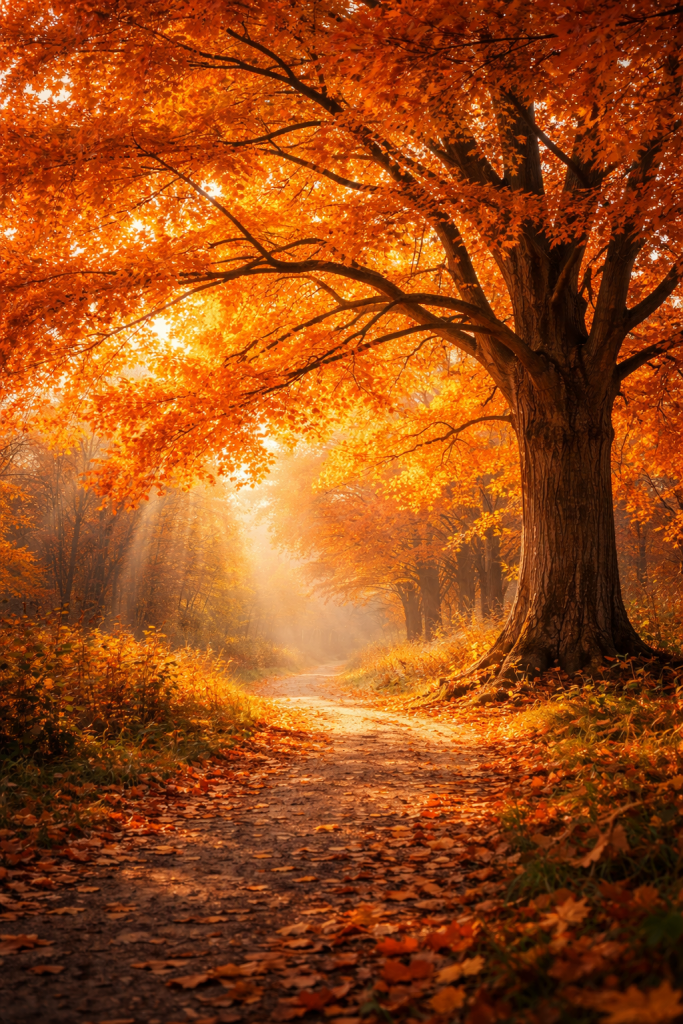
I started writing my book, the art of code, in autumn last year. The trees were dressed in a thousand colors—lemon yellow, amber, scarlet—beginning to shed their leaves. Scattered across the ground in a colorful patchwork, they were illuminated by the last soft sunlight of the year. Walking outside awakened the senses, and the mind drifted into a serene, contemplative space. The world was… beautiful.
What makes something beautiful?
We seek beauty within ourselves, whether inner or outer, in our homes, on our walks, in our creations. Whether it’s a landscape, a person, or a work of art, this concept—so difficult to define—feels somehow self-evident. Something beautiful is something that is pleasing to look at or listen to. Observing it triggers an emotion close to happiness, an “aesthetic” feeling.
But emotions are purely subjective, making beauty difficult to define. Standards of beauty evolve over time and often differ from one person to another. These standards reflect our cultural background, as well as our personal tastes. What was beautiful yesterday may not be today; what one finds beautiful might not appeal to someone else. Yet, certain patterns emerge: beauty often evokes balance, symmetry, harmony, and elegance. It represents an ideal, an absolute, a form of perfection.
Can code be beautiful?
Can we apply this concept to code? Can code be “beautiful”? The idea is unsettling; code exists to solve a problem, and in that sense, it’s closer to mathematical reasoning. In our culture, beauty is typically associated with people, landscapes, the arts—painting, music, poetry, literature, sculpture—and even fashion, but rarely with science. A painting can be beautiful, but can we call a mathematical equation beautiful?
And yet, mathematics has always held a place in the study of beauty. Mathematical patterns defining beauty can be found throughout nature and art—for example, the golden ratio, symmetry, fractals, and even the harmonic principles that structure music.
Mathematical beauty is defined by Wikipedia as “the aesthetic pleasure derived from the abstractness, purity, simplicity, depth, or orderliness of mathematics.” Those same words could easily be applied to an algorithm, which is defined by the Cambridge Dictionary as “a set of mathematical instructions or rules.”
In my previous book, I dedicated an entire chapter to “The Art of Coding.” I compare coding to writing a book, crafting a piece of furniture, or painting. Like each of these activities, coding requires a certain expertise, skills hard-won through experience, to produce something useful, readable, and maintainable.
But it’s also something that gives the developer a deep intellectual satisfaction that’s difficult to explain. It took me years to realize that this feeling was triggered by the perfection and elegance of some of the code before me, whether it was my own or that of a peer. That code was magnificent; it was beautiful.
Beauty as a practical discipline to improve quality
Beautiful code is code that elicits a sense of intellectual pleasure and satisfaction. Certainly, code can only reach this level if it follows programming best practices — including indentation and cleanliness — but there’s got to be more. For it to be truly beautiful, there must be a touch of elegance, a simple clarity in its solution.
In The Art of Code, I explore this idea in depth, looking beyond intuition to understand how beauty can emerge in software through deliberate choices. The book offers concrete guidance drawn from real practice, and shows why striving for beautiful code is not an abstract pursuit, but a practical one—leading to systems that are clearer, more resilient, and more satisfying to work with over time.